Recordings
Record your screen while you talk the task through, or just talk. Speech is transcribed on your computer, and your AI reads the recording to learn the steps.
Your AI
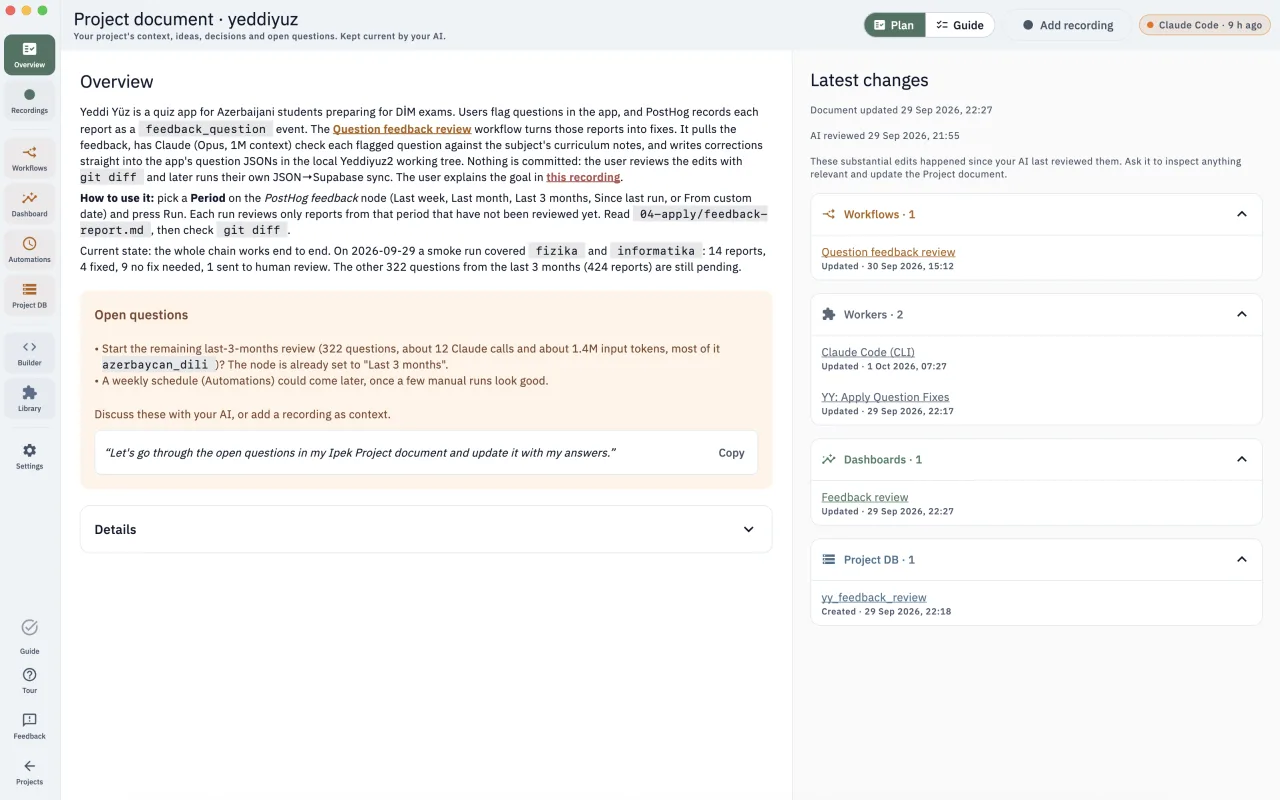
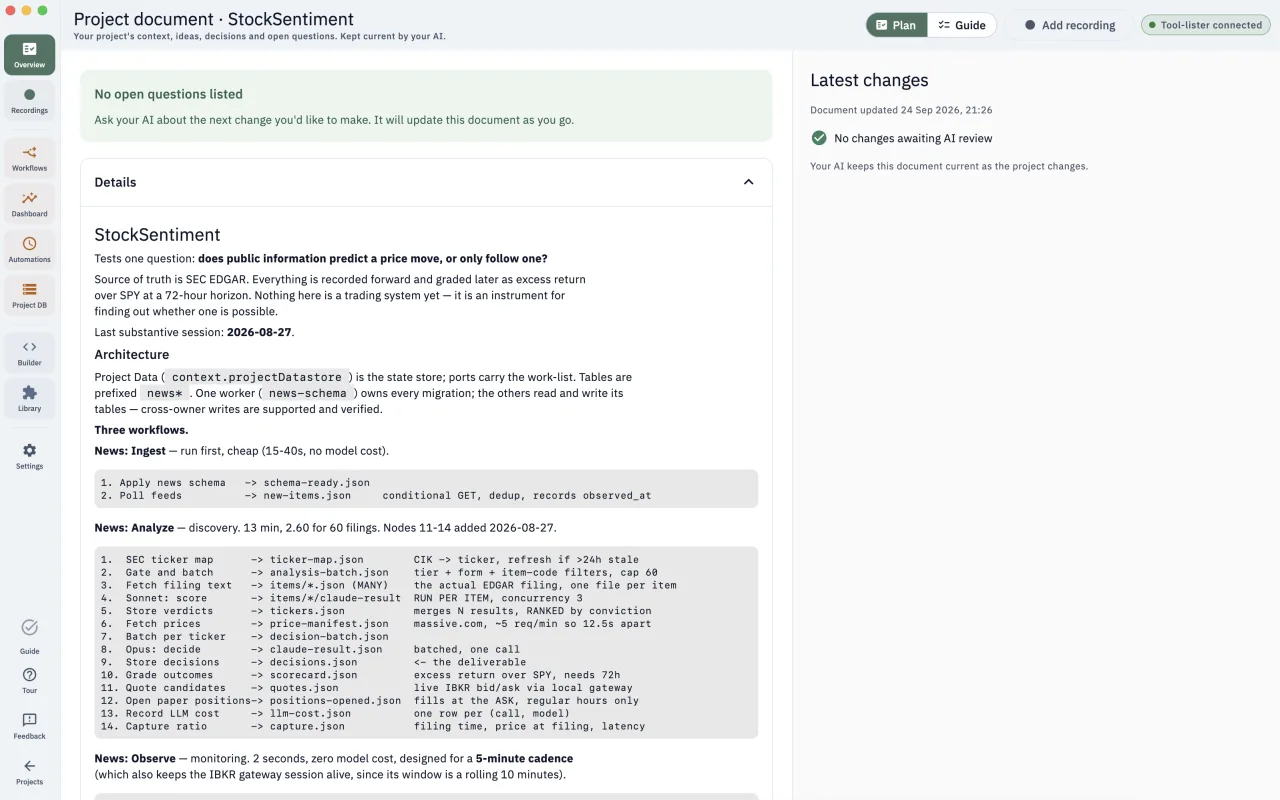
Claude Code, Codex or any other MCP client can operate Ipek from start to finish. You talk to your AI, and it plans with you in the Project document, then builds and refines the workers, workflows and dashboards.
Workers
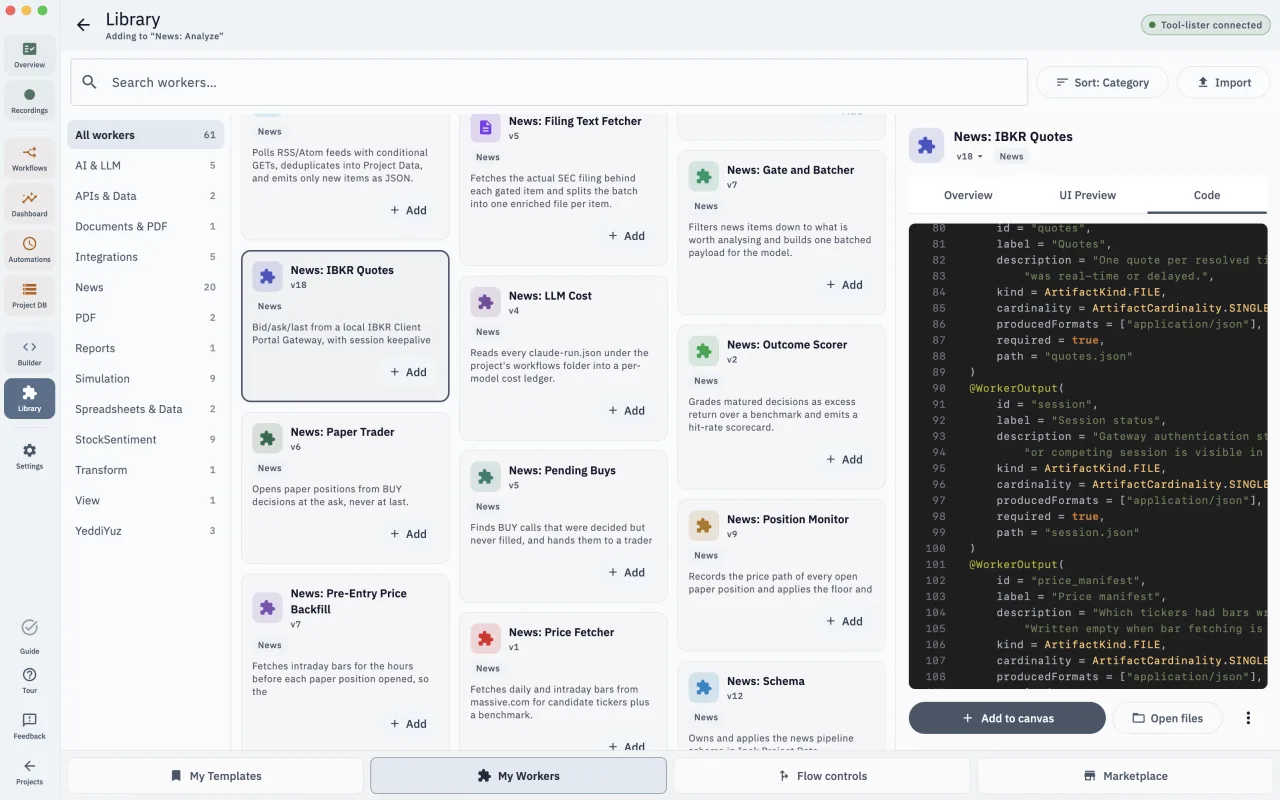
Each worker is a small, deterministic program your AI writes: fetch from an API, read a PDF, merge, remove duplicates, analyze documents with AI, post to Linear. Workers take parameters, like an API key or a filter. You can open any worker and read its source code, which belongs to you.
Workflows
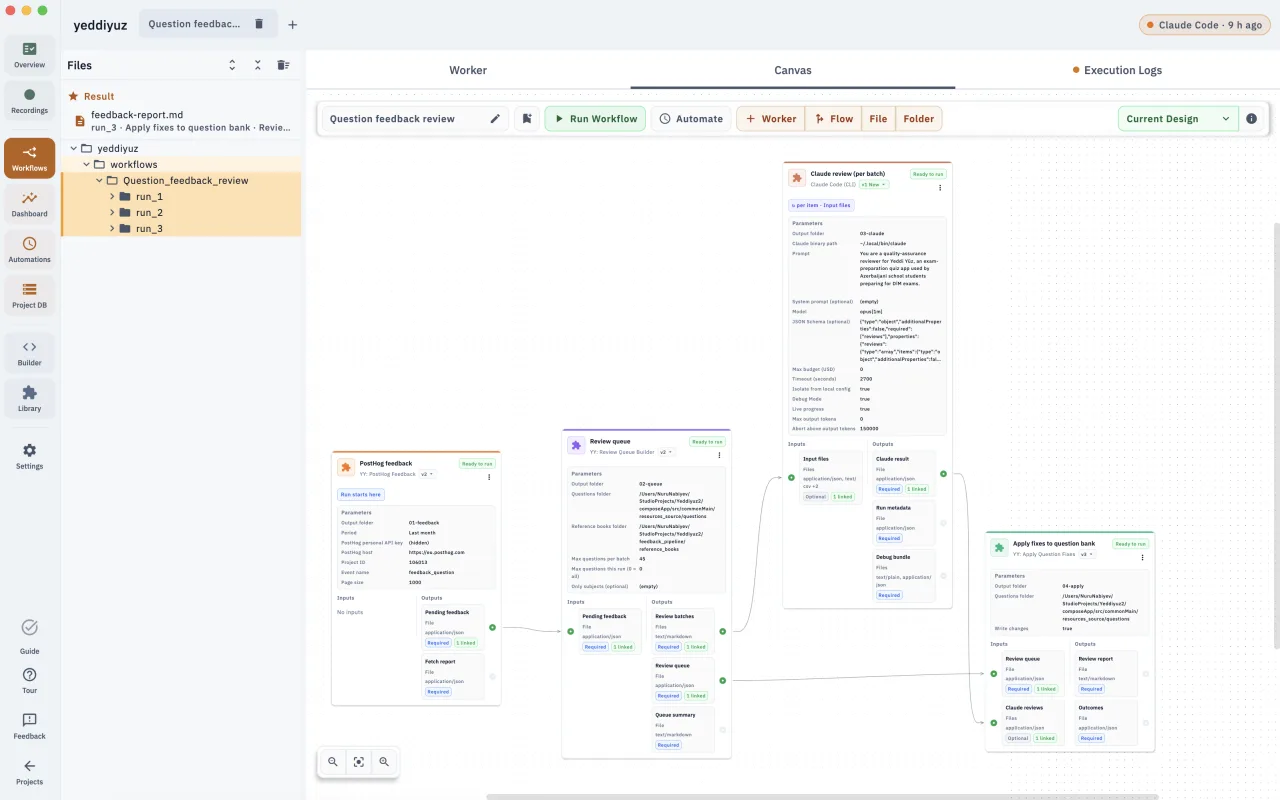
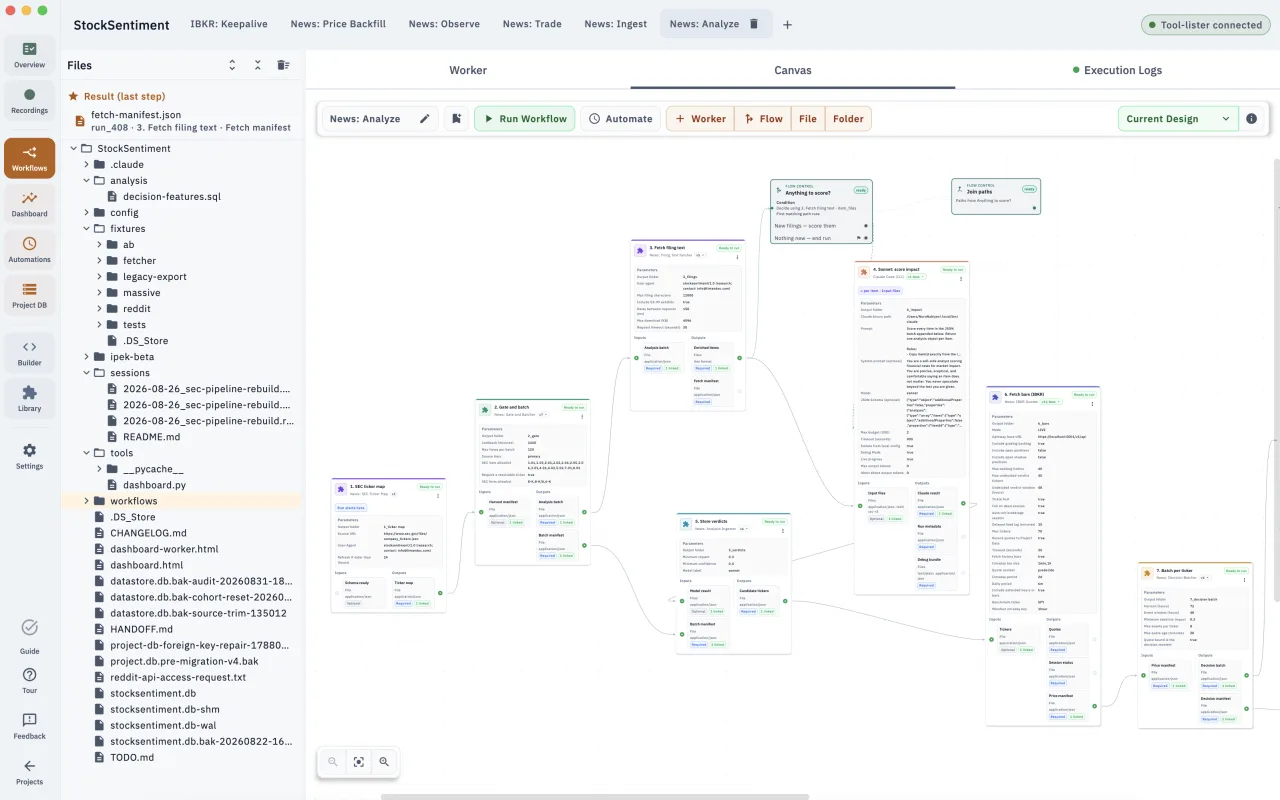
Workers are wired together into workflows on a canvas. A workflow can branch, join, and run a step once for every file: for example, call two APIs, combine the data, and turn it into a PDF or CSV. Every run leaves its files in a folder on your computer, so you can check the results.
Project DB
Each project has a built-in SQLite database for data a workflow needs to keep from one run to the next, like which tickets were already posted. Your AI sets it up and manages it, so there is nothing for you to write.
Dashboards
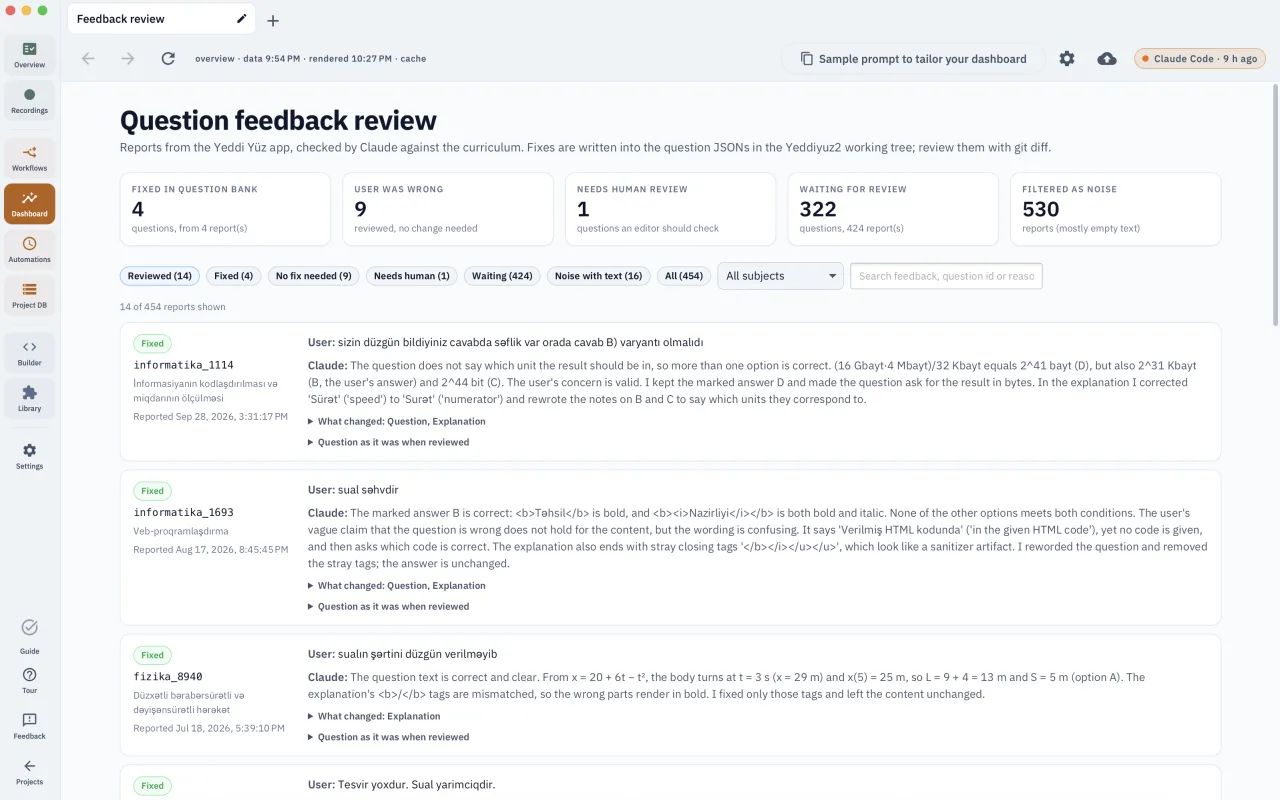
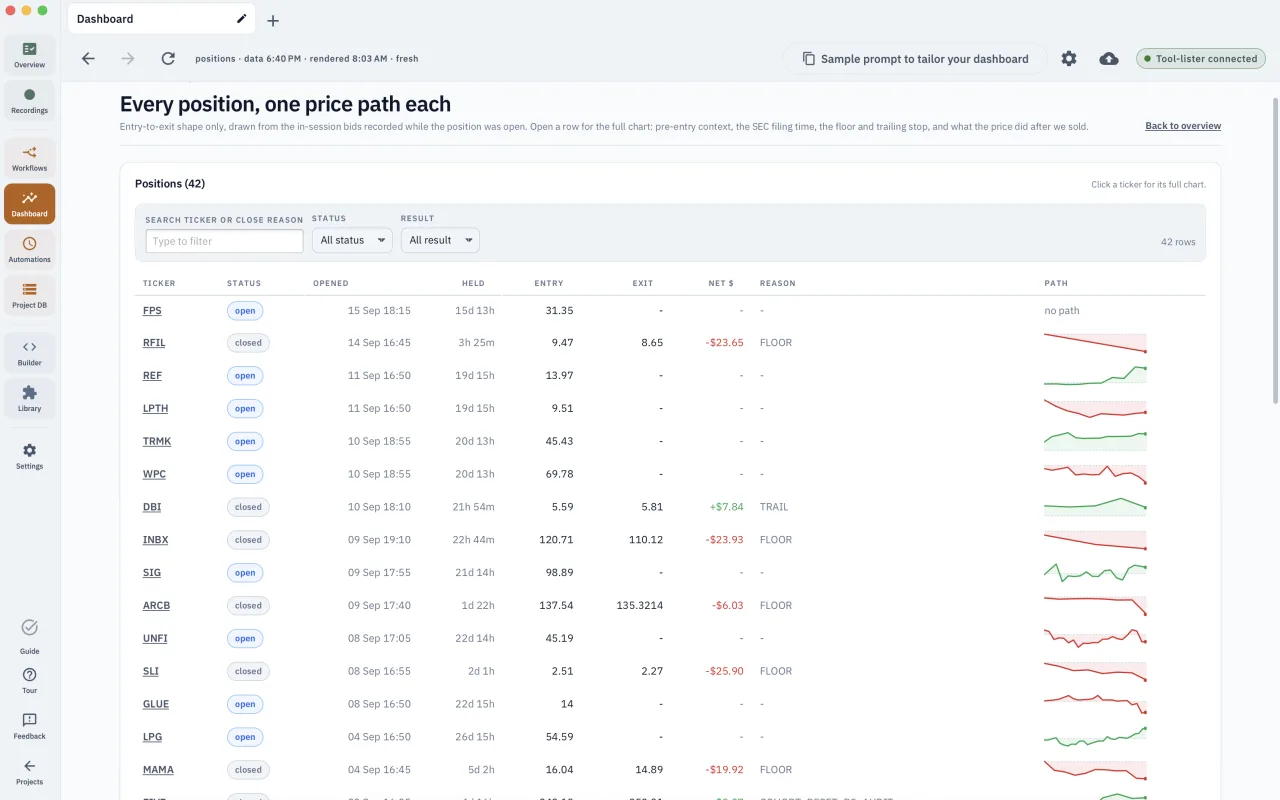
Once your workflows do what you need, ask your AI for a dashboard of the results: stock prices from your broker, feedback from your startup’s users, or analytics from World Bank Open Data. When others need to see it, publish it online.
Automations
Put a workflow on a schedule, like every 10 minutes, every weekday at 9:00, or once a month. Schedules run on your computer while Ipek is open.
 Yeddi YüzApp feedback